Skip to content
walkwalk.
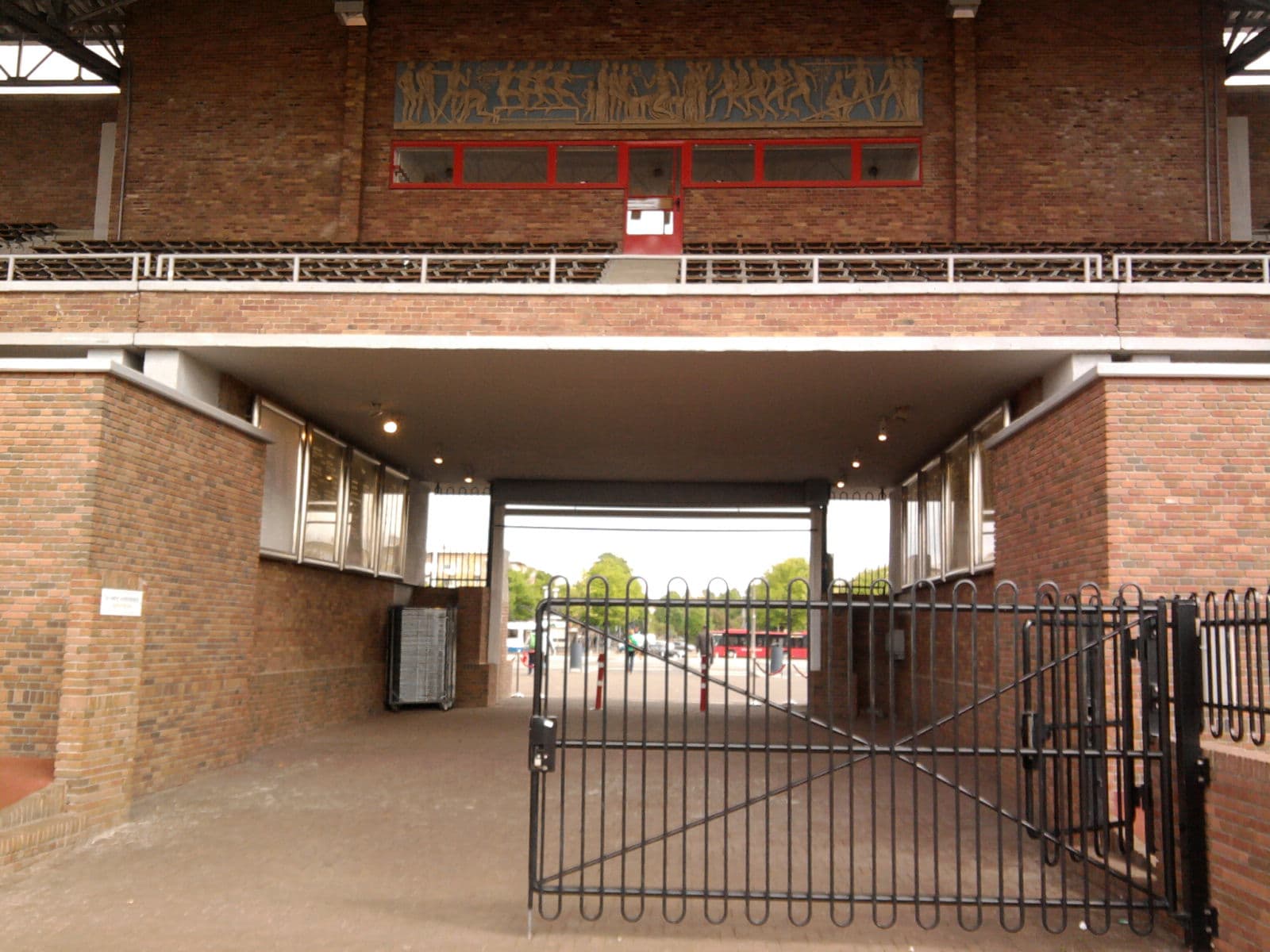
Olympisch Stadion: the 1928 quarter and the water
architectureriverside

Olympisch Stadion: the 1928 quarter and the water

Jan Wils' marathon tower, houseboats on the Schinkel, and a heritage tram at the old terminus.

Photo: Paul Berendsen / Wikimedia Commons, CC BY-SA 4.0

Distance

3.5 km

Time

~ 80 min

Difficulty

Easy

End

Haarlemmermeerstation tram (2)

Best at

afternoon

Right now
20°C· Clear

Open in Maps for turn-by-turn, or take it offline as GPX.

Amsterdam built a whole quarter to host the 1928 Olympics and then kept it — a calm grid of 1920s housing around a stadium that never overstayed its welcome. This walk pairs that quiet monumental edge with the working water just beyond it, where houseboats and boatyards remember what these canals were for. Come in the afternoon.

Start at the Olympisch Stadion, Jan Wils' low brick oval of 1928, its Marathon Tower still carrying the cauldron of the first lit Olympic flame. Walk the curved wall, then cross Stadionplein, the square the model district was planned around. From there, drop to the Schinkel, a working canal lined with lived-in houseboats — washing lines, deck gardens, the unposed city.

Follow the water past the Zuider-Amstelkanaal villas, each one its own small statement, then the IJsbaanpad boatyards, where the canal still smells of varnish. Land at Haarlemmermeerstation, the 1915 terminus that now runs the city's heritage trams south on summer Sundays. The building alone — listed, and quietly grand — is the right place to stop.

The route

On the map.

Elevation

9 m·7 m·04 m ASL

Stops along the way

Things to notice.

  1. 01
    1

    Olympisch Stadion

    Jan Wils built this for the 1928 Games, and the brick Marathon Tower still holds the cauldron that burned the first modern Olympic flame. Walk the curved outer wall; the whole thing is a calm, low oval, more handsome than grand.

  2. 02
    2

    Stadionplein

    The square the quarter was planned around. Stand here and read the 1920s street grid running off it — this was a model district, built to house the Games and the people after them. Then head for the water.

  3. 03
    3

    Schinkel waterfront

    A working canal where the houseboats are properly lived-in — washing lines, deck plants, cats. Walk the quay slowly; this is the unposed Amsterdam the postcards skip.

  4. 04
    4

    Zuider-Amstelkanaal villas

    A short stretch of 1920s villas along the canal, each one different, set back behind small gardens. The money that left the centre landed here; look, don't covet, keep walking.

  5. 05
    5

    IJsbaanpad boatyards

    A working waterside lane of boat sheds and small yards — the un-gentrified edge, still smelling of varnish and engine oil. A reminder that this water was made to be worked, not just admired.

  6. 06
    6

    Haarlemmermeerstation

    The old 1915 terminus, now home to the Electrische Museumtramlijn — heritage trams that run south on Sundays from spring to autumn. End here; even on a quiet day the building, a listed monument, is the right full stop.

Good to know

Before you go.

How long is the Olympisch Stadion: the 1928 quarter and the water walk?
About 3.5 km — roughly 80 minutes at an unhurried pace, plus however long you linger.
Where does it start and end?
It starts at Olympisch Stadion tram (16/24) and ends at Haarlemmermeerstation tram (2).
Is it free?
Yes. It's a self-guided route — free to follow, with no guide to book and nothing to pay.
When is it best?
It's best in the afternoon.