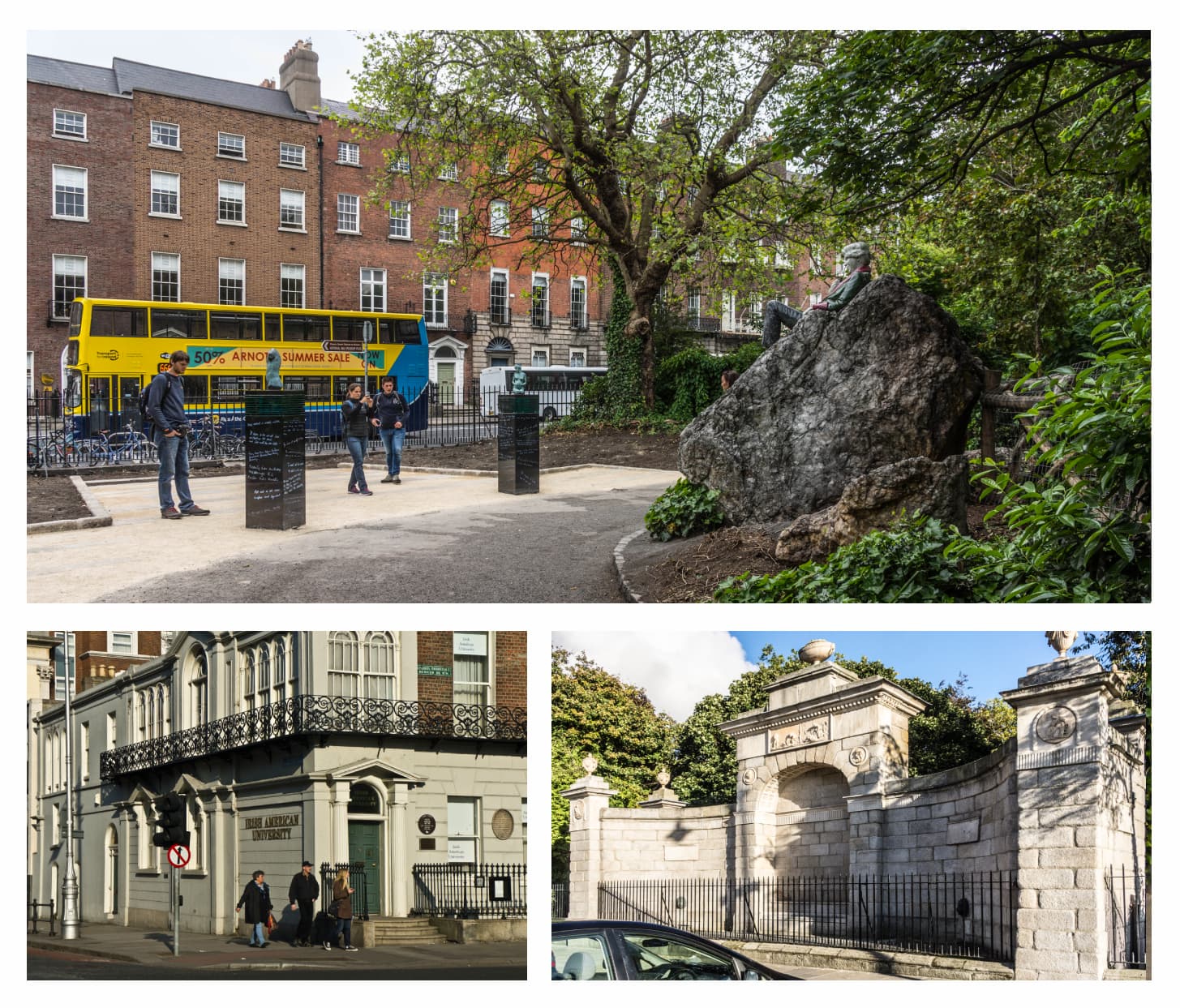
Georgian Dublin is the city's straightest line of self-confidence: a grid of red brick thrown up in the seventeen-hundreds for a parliament that thought it would last. The parliament went; the brick stayed, and the painted doors became the thing everyone photographs without quite knowing why.
Start on the north side of Merrion Square, the longest run of it, and walk slowly enough to notice the fanlights change house to house. At the corner, Oscar Wilde lounges on his boulder, looking back at the home he grew up in. Then the institutions take over: the National Gallery, free, with a Caravaggio that spent two hundred years lost; and Leinster House behind its railings, a country mansion that ended up running the country.
Drop south through Merrion Street and into Fitzwilliam Square, the smallest and the last, its garden still locked to keyholders only. You won't get into the green — that's the point. The doors and the symmetry are a street museum you walk for free. St Stephen's Green and the Luas are a short stroll west.

