Skip to content
walkwalk.
Harlem: the heart of it
heritagefood-forward

Harlem: the heart of it

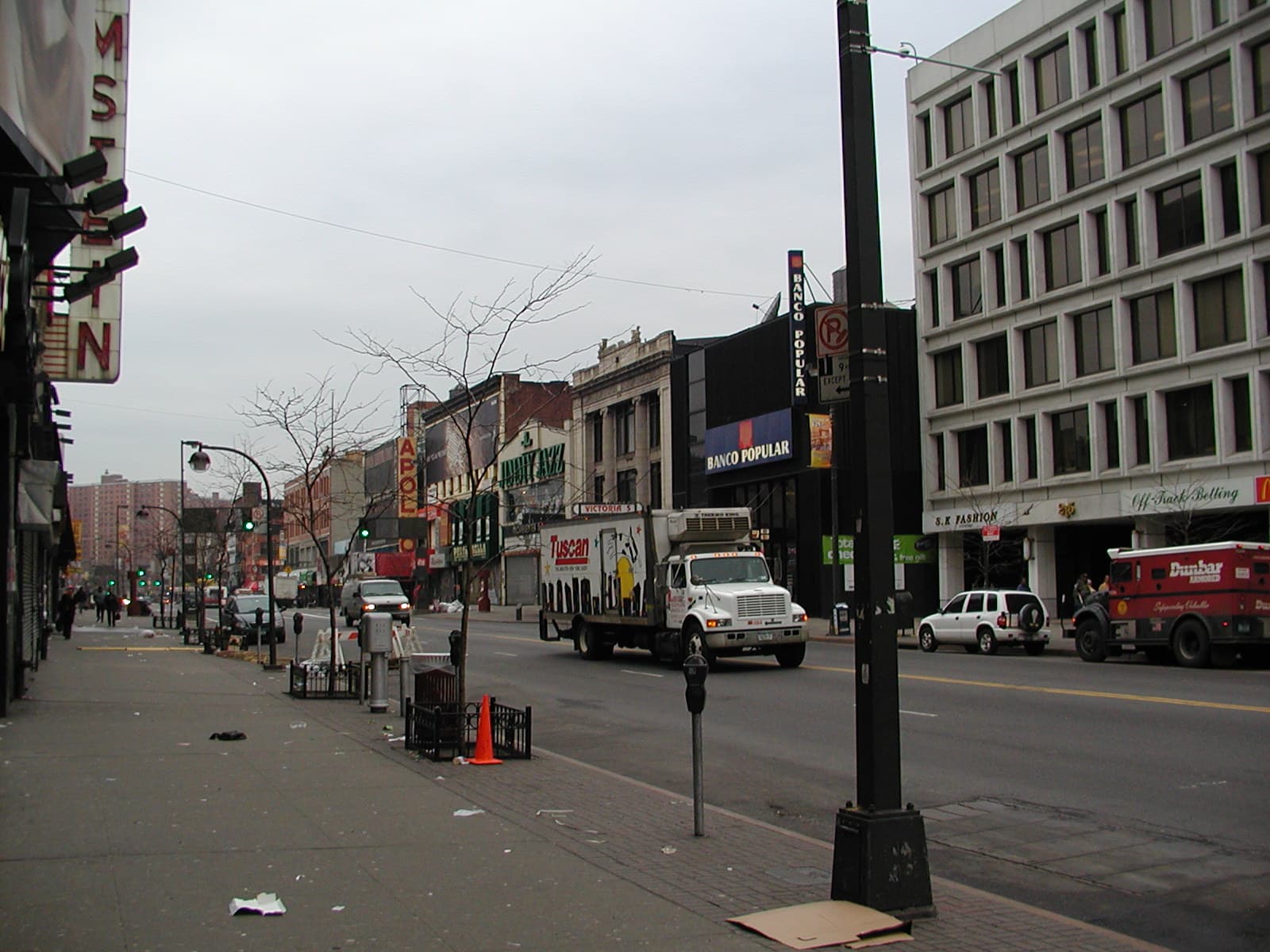
125th Street, the Apollo, the Schomburg, and Striver's Row — the capital of Black America, walked with respect.

Photo: Petri Krohn / Wikimedia Commons, CC BY-SA 3.0

Drafted by Claude — the editor hasn’t walked this one yet. We’ll update this notice once it’s been verified on the ground.

Distance

3 km

Time

~ 75 min

Difficulty

Easy

End

135 St (2/3)

Best at

afternoon

Right now
21°C· Clear

Open in Maps for turn-by-turn, or take it offline as GPX.

Harlem is the capital of Black America — not a museum of it, a living one, still writing the next chapter on a Tuesday afternoon. The walk that follows treats it as a neighbourhood you've been let into, not a spectacle: three kilometres from 125th Street up to the Schomburg, paying attention, keeping out of the way.

Begin under the Apollo's marquee, where Amateur Night has made and unmade careers since 1934, and the Studio Museum a block on, which backed Black artists before the wider art world thought to. Walk 125th itself — the record shops, the churches, the vendors, the soul-food tables — as a working high street, because that's what it is. Then up to Marcus Garvey Park and its iron watchtower, and on to Striver's Row, the three blocks of 1890s rowhouses so fine that the people who reached for them named the streets.

End at the Schomburg Center, where Langston Hughes is interred in the lobby floor — the memory of a whole people, kept on 135th Street. The 2/3 is right there. Sunday mornings, the gospel carries from the churches; go to listen, not to look.
The route

On the map.

Elevation

46 m·38 m·818 m ASL

Stops along the way

Things to notice.

  1. 01
    1

    The Apollo Theater

    The marquee on 125th Street that launched Ella Fitzgerald, James Brown, and most of the rest. Amateur Night still runs on Wednesdays, as it has since 1934 — the same crowd that made and unmade careers. Stand under the sign; the names on the wall of fame do the rest.

  2. 02
    2

    The Studio Museum in Harlem

    The museum that took artists of African descent seriously before the rest of the art world caught up — Harlem-based, and the launching pad for a generation of major painters. Check whether it's reopened in its new building before you go; the collection is worth timing a visit around.

  3. 03
    3

    125th Street

    The main artery — gospel record shops, the street vendors, the churches between the storefronts. This is a working high street, not a set; walk it the way you'd walk any neighbourhood's main street, paying attention and keeping out of the way. The soul-food tables are along here and the side streets.

  4. 04
    4

    Marcus Garvey Park

    Twenty acres on a rock outcrop, named for the Pan-African leader. The cast-iron fire watchtower at the top is the last of its kind in the city. The Mount Morris brownstone blocks around the park are some of the handsomest housing in Harlem.

  5. 05
    5

    Striver's Row

    West 138th and 139th between Adam Clayton Powell and Frederick Douglass — three blocks of 1890s rowhouses so elegant that the Black professionals who 'strove' to live here gave the streets their name. The original 'Walk Your Horses' sign still hangs in one of the rear alleys. Quiet, residential; walk it gently.

  6. 06
    6

    Schomburg Center for Research in Black Culture

    The research library that is, more than any single place, the memory of Black America — Langston Hughes's ashes are interred in the floor of the lobby. Free to go in and see the rotating exhibition. A fitting end before the 135th Street train.