Skip to content
walkwalk.
Turtle Bay: the United Nations and the quiet east side
architectureriverside

Turtle Bay: the United Nations and the quiet east side

The UN and the river, Tudor City on its bluff, the Ford Foundation's indoor garden, and Turtle Bay's hush.

Photo: Jakub Hałun / Wikimedia Commons, CC BY 4.0

Drafted by Claude — the editor hasn’t walked this one yet. We’ll update this notice once it’s been verified on the ground.

Distance

3 km

Time

~ 75 min

Difficulty

Moderate

End

51 St (6) / Lexington Av–53 St (E/M)

Best at

afternoon

Right now
20°C· Clear

Open in Maps for turn-by-turn, or take it offline as GPX.

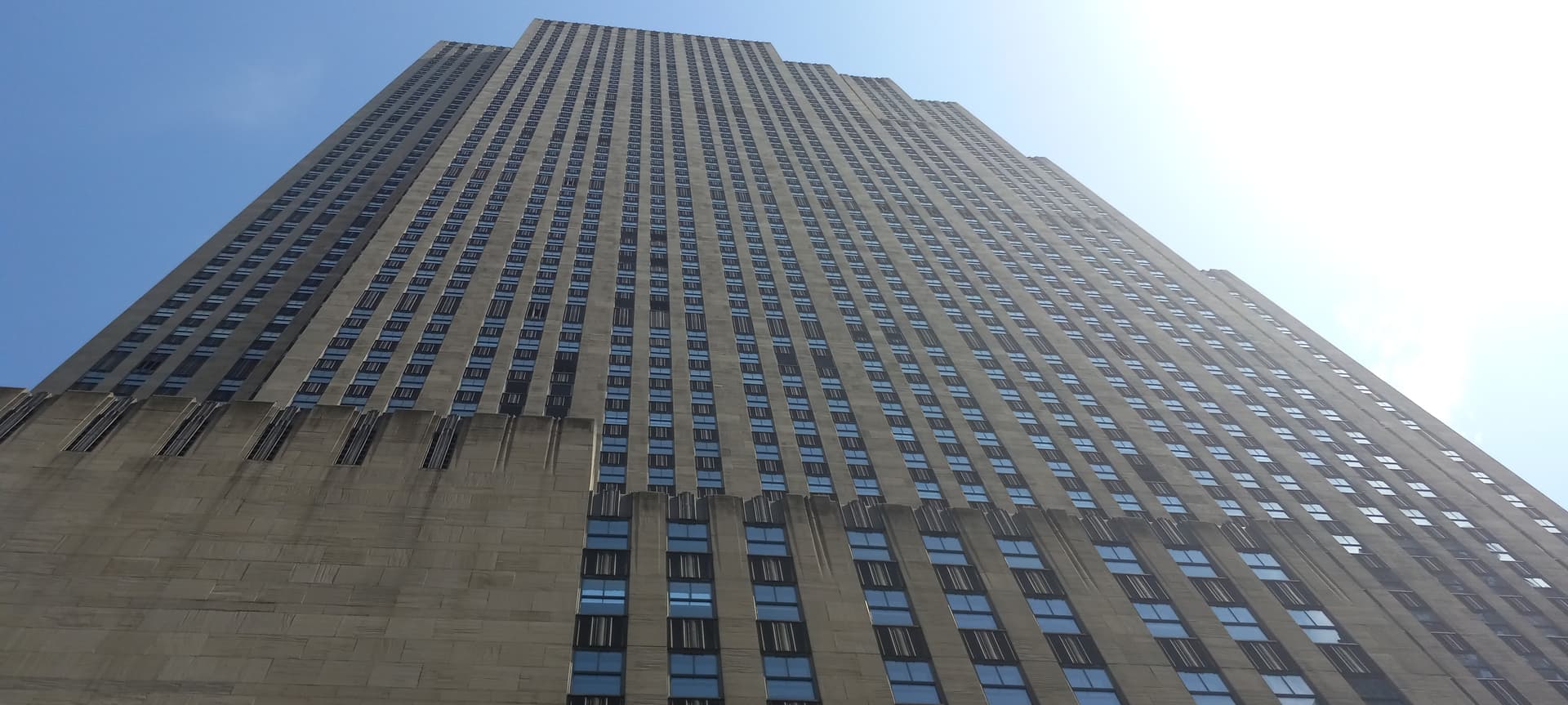
This is the east side almost nobody walks — the blocks behind Grand Central that slope down to the river, where the city built its diplomats a campus and its families a set of secret gardens. Three kilometres of monumental and quiet, often in the same block.

Start up on Tudor City, the 1920s Gothic enclave on its bluff, built facing inward because the riverfront below was still slaughterhouses. Drop down to the United Nations — the line of flags, Harrison's Secretariat slab, the sculptures of guns tied in knots and swords turned to ploughs — and follow the garden along the East River if the gate's open. Then the surprise: walk back to the Ford Foundation and step into its atrium, a twelve-storey indoor garden under glass, free and nearly always empty.

North into Turtle Bay itself, the brownstone rows where the back gardens were merged into one shared courtyard — Hepburn's old street, leafy and still. End at Greenacre Park, a single lot given over to a wall of falling water loud enough to erase the traffic. Sit a while; the 6 and the E/M are two blocks west.
The route

On the map.

Elevation

303 m·287 m·-1244 m ASL

Stops along the way

Things to notice.

  1. 01
    1

    Tudor City

    Start on the bluff. The 1920s Gothic apartment enclave sits up above 42nd Street on its own bridge of land — turn into the two small private parks and look down the slope to the UN. Built deliberately facing inward, away from the slaughterhouses and gasworks that used to line the river.

  2. 02
    2

    United Nations headquarters

    Down the steps to First Avenue and the line of flags — one per member state, in English alphabetical order. The Secretariat slab is Harrison's 1952 glass-and-marble. You're on international territory here, not New York. Sculptures dot the garden: the knotted gun barrel, the figure beating a sword into a ploughshare.

  3. 03
    3

    East River esplanade view

    The garden walk runs along the river behind the complex — flags, lawns, the water, Queens across it and the Roosevelt Island tram cables to the north. Public access to the grounds varies with security; if the gate's shut, the view from the 1st Avenue railings still holds.

  4. 04
    4

    Ford Foundation Center for Social Justice

    Walk back up 43rd to Kevin Roche's 1968 glass box — and step inside for the atrium. A third of an acre of indoor garden under a twelve-storey skylight, terraced and full of trees, free and almost always empty. The best room on this walk and the one nobody tells you about.

  5. 05
    5

    Turtle Bay Gardens / East 49th Street

    North into Turtle Bay proper — the brownstone blocks between Second and Third where the back gardens were knocked together into one shared courtyard in the 1920s. Katharine Hepburn lived on the 49th Street row for decades. Quiet, leafy, residential; walk slowly and look at the doors.

  6. 06
    6

    Greenacre Park

    End at the pocket waterfall on 51st between Second and Third — a single small lot with a wall of falling water that drowns the city out completely. Twenty-five feet of cascade, a few tables, a coffee counter. Sit until the traffic disappears, then it's two blocks to the 6 or the E/M.