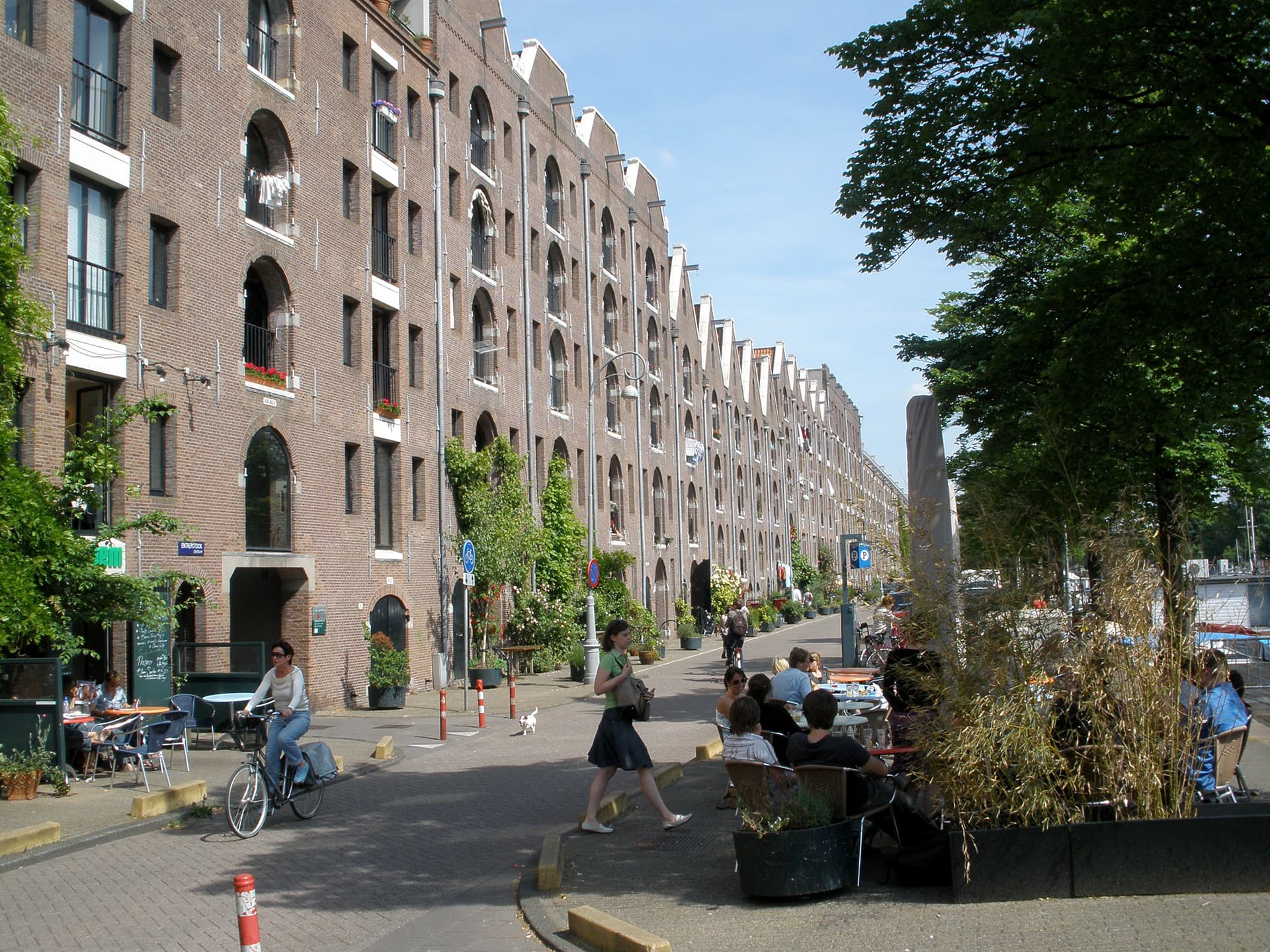
The Watergraafsmeer is a drained lake with two utopias built on the silt, and you can walk between them before lunch. Three and a half kilometres, flat, best in the morning when the estate gardens are empty and the concrete village hasn't yet decided whether it's grim or wonderful. (It's wonderful.)
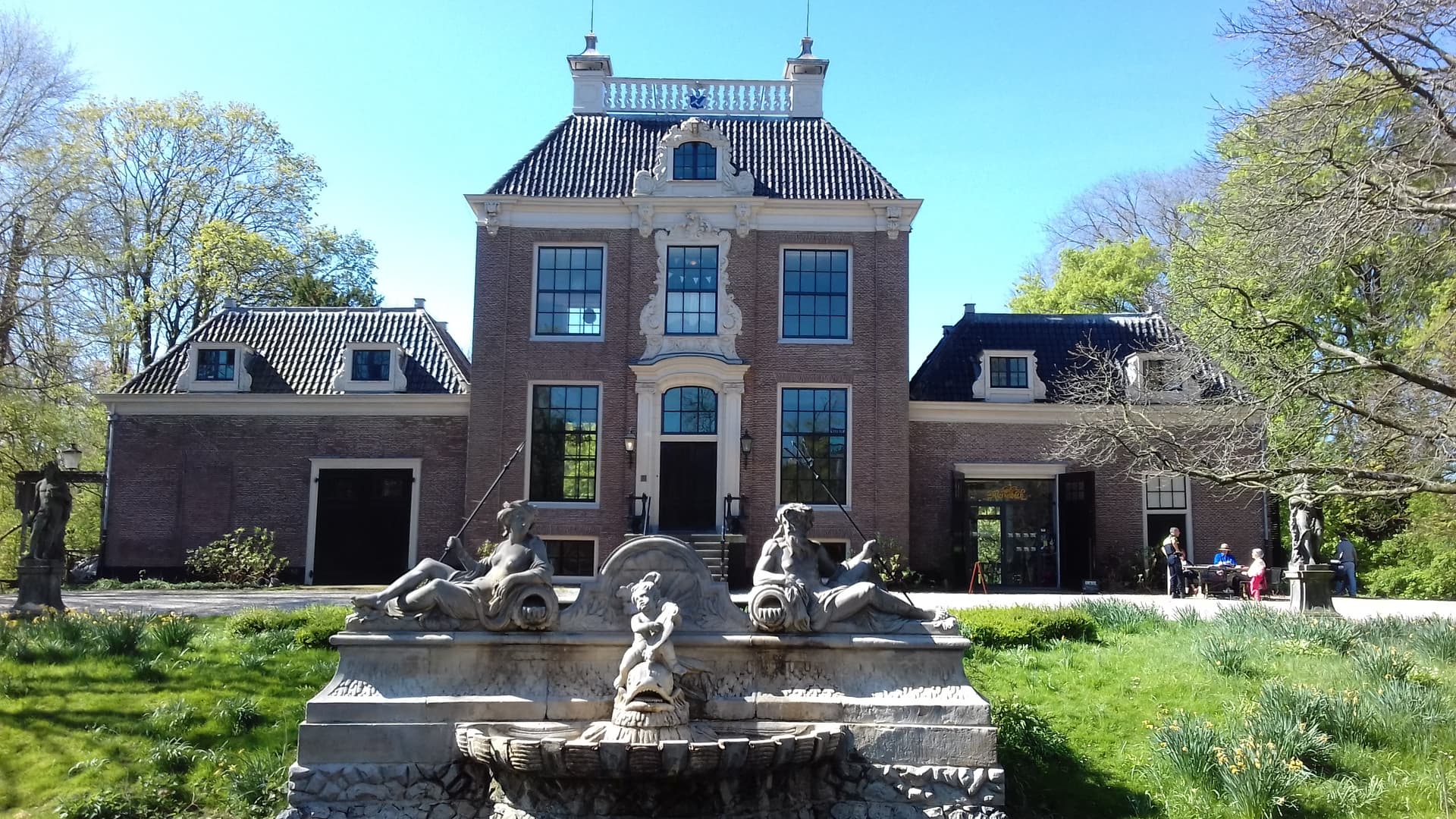
Start in Park Frankendael, the last country estate left inside the ring, with the Watergraafsmeer's only surviving 18th-century manor house. Walk the formal gardens behind it, then look in at De Kas — a 1920s nursery glasshouse rescued from demolition, now a restaurant that grows its vegetables in the beds you're standing beside. You don't have to eat there to admire the idea.
Cross the Middenweg, the old road over the lakebed, into Betondorp — the concrete village, built 1923–1925 to test cheap poured-concrete houses during a brick shortage. The streets are named for farming, the lettering over the shops on the Brink is quietly avant-garde, and the Akkerstraat raised Johan Cruyff across from the old Ajax ground. Land back on the Middenweg shops; tram 19 takes you out.