There's a village inside Amsterdam-Noord that predates most of the city around it, and you walk into it through a wood. The Vliegenbos, planted from 1913 as Amsterdam's first municipal forest so working families had somewhere to spend a Sunday, is denser and older than the borough that grew up beside it.
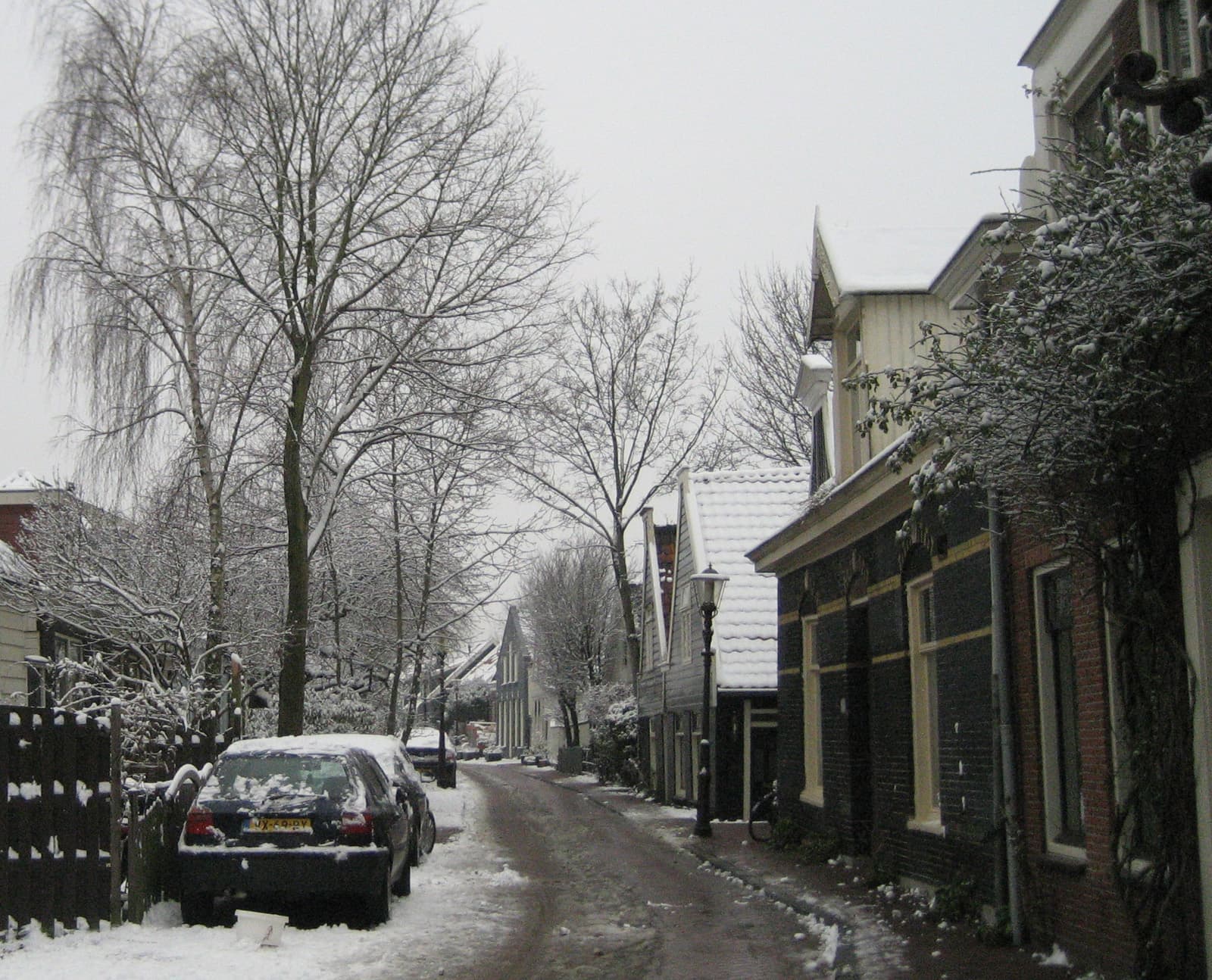
Come out of the trees and up onto the Nieuwendammerdijk, the old sea dike, and the road becomes a lane. For a kilometre it runs east with timber houses leaning below the crown — sea-captains built them in wood, not brick, so the weight wouldn't split the dike, and two centuries on they lean like they're listening. Look down the side-alleys to the water between them.
Halfway along is Café 't Sluisje, a bruine kroeg (the dark, lived-in neighbourhood pub) in a building from the 1560s, beside the smallest lock in the city. Stop for the appeltaart. Below the dike, a pocket harbour of wooden boats; walk down to the waterline for the view back up. The lane runs on toward Schellingwoude, but leave it at the Meeuwenlaan corner — and turn for one last look first.