Skip to content
walkwalk.
Wannsee: the lakes, the lido, and the dark villa
waterfrontleafy

Wannsee: the lakes, the lido, and the dark villa

The great 1920s lido, a painter's garden, a ferry to a peacock island, and a villa best not forgotten.

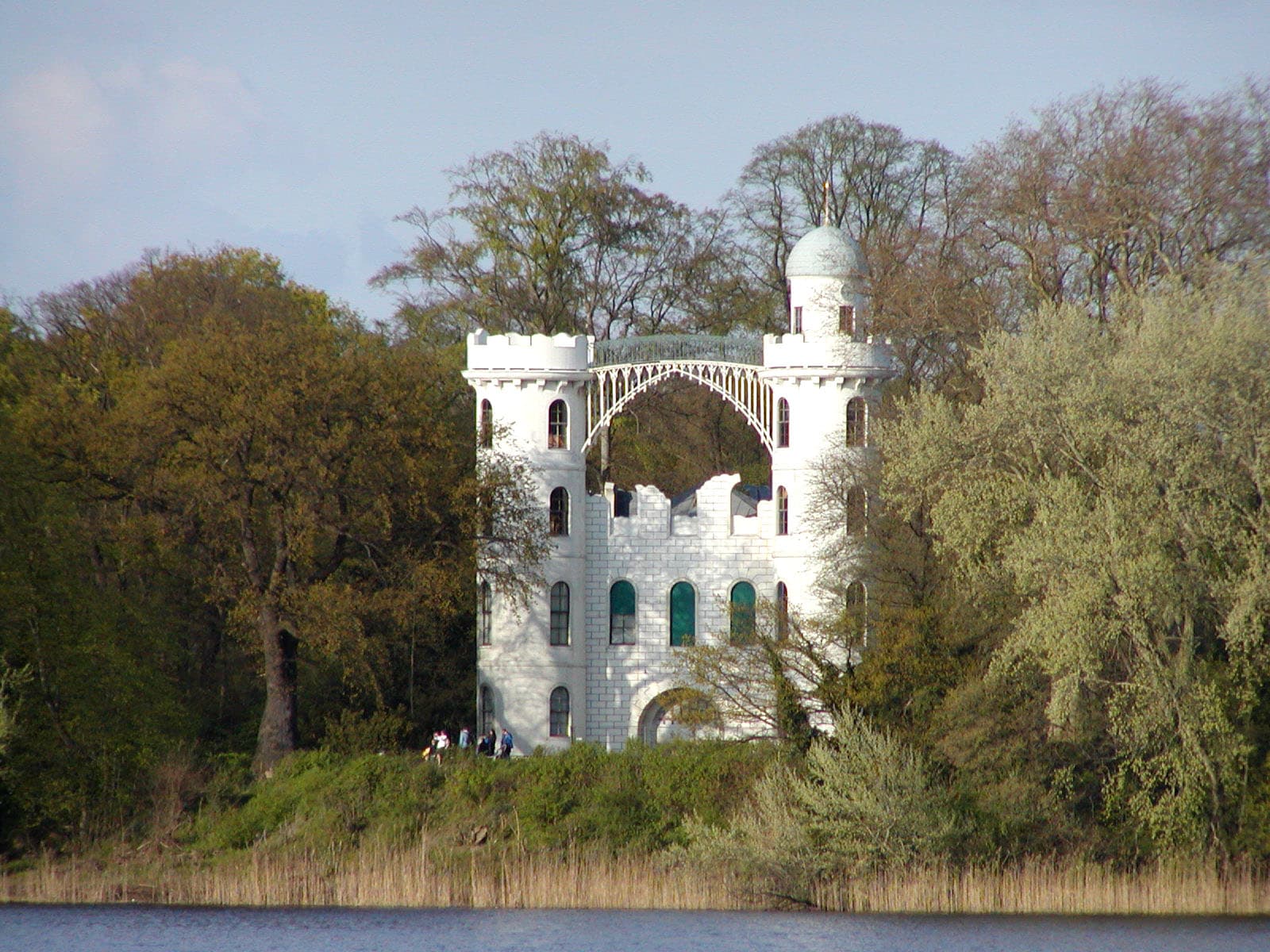
Photo: RThiele / Wikimedia Commons, CC BY-SA 3.0

Drafted by Claude — the editor hasn’t walked this one yet. We’ll update this notice once it’s been verified on the ground.

Distance

4.6 km

Time

~ 100 min

Difficulty

Strenuous

End

Wannsee (S1/S7)

Best at

morning

Right now
17°C· Overcast

Open in Maps for turn-by-turn, or take it offline as GPX.

Wannsee is two walks in one mood: a summer-Berlin idyll of lake, sand, and a folly-island — and, on the same shore, the villa where the Holocaust was administered. Hold both. The walk doesn't choose between them, and neither should you.

Start at the Strandbad Wannsee, the great 1920s lido built to give the city a beach. Walk the boardwalk for the Weimar architecture, not the sand. South along the shore comes the Liebermann-Villa — the painter's house and the garden he painted until he was driven out — and then, a few minutes on, the House of the Wannsee Conference. It is free, it is sobering, and it deserves your time; on 20 January 1942 the machinery of the genocide was coordinated in its dining room.

From there the mood lifts on the water. Pick up the shore path west to the ferry at Nikolskoer Weg and cross to Pfaueninsel — Peacock Island, a UNESCO garden with a white toy-castle, lawns like brushstrokes, and the birds underfoot. No cars ever reached it. Loop it slowly, take the last ferry back, and the S-Bahn home from Wannsee.
The route

On the map.

Elevation

309 m·324 m·2694 m ASL

Stops along the way

Things to notice.

  1. 01
    1

    Strandbad Wannsee

    The vast 1920s *Strandbad* (lido) — a kilometre of imported sand and a long ridge of changing pavilions. You don't have to swim. Walk the boardwalk and read the building, which is the real reason to come: Weimar-era public architecture, built to give working Berlin a beach.

  2. 02
    2

    Liebermann-Villa

    Max Liebermann's summer house, and the garden he painted obsessively until the Nazis pushed him out. The flower terraces and the lakeward lawn are restored to his canvases. A small entry fee; the café terrace over the water is worth the stop on its own.

  3. 03
    3

    House of the Wannsee Conference

    In this lakeside villa, on 20 January 1942, senior Nazi officials coordinated the murder of Europe's Jews. It is now a memorial and education centre, free to enter. Go in if you have the time and the steadiness; this is not a stop to hurry past.

  4. 04
    4

    Wannsee shore path

    Between the villas, the public shore path threads along the water under old trees. Sailboats, swimmers in season, the *See* (lake) wide and bright. Follow it back toward the ferry pier at Nikolskoer Weg.

  5. 05
    5

    Pfaueninsel ferry

    The little BVG ferry across to *Pfaueninsel* (Peacock Island) — a short crossing that counts as transit, no car needed. Check the timetable and the season; it doesn't run year-round and the last boat back is earlier than you'd like.

  6. 06
    6

    Pfaueninsel

    A UNESCO landscape garden on its own island: the white toy-castle *Schloss* the Prussian king built as a folly, lawns laid out like a painting, and the peacocks that give the place its name. Cars never came here; it's all on foot. Walk a slow loop, then catch the ferry back.