Strøget is Europe's longest pedestrian street — 1.1 km from Rådhuspladsen in the west to Kongens Nytorv in the east, car-free since 1962. The walk isn't for shopping. It's for the pace of a city centre that took the cars out before anywhere else did and never put them back.
Three kilometres, ninety minutes including the side-alley detour. Start at Rådhuspladsen: the brick neo-Renaissance city hall, the bronze dragon on the fountain, the daily rhythm of the city already arriving for coffee. Walk east. The first stretches — Frederiksberggade, then Nygade, then Vimmelskaftet — read late-Renaissance through to 19th-c bourgeois, with pedestrians and cyclists moving at walking pace and the buildings doing the actual show.
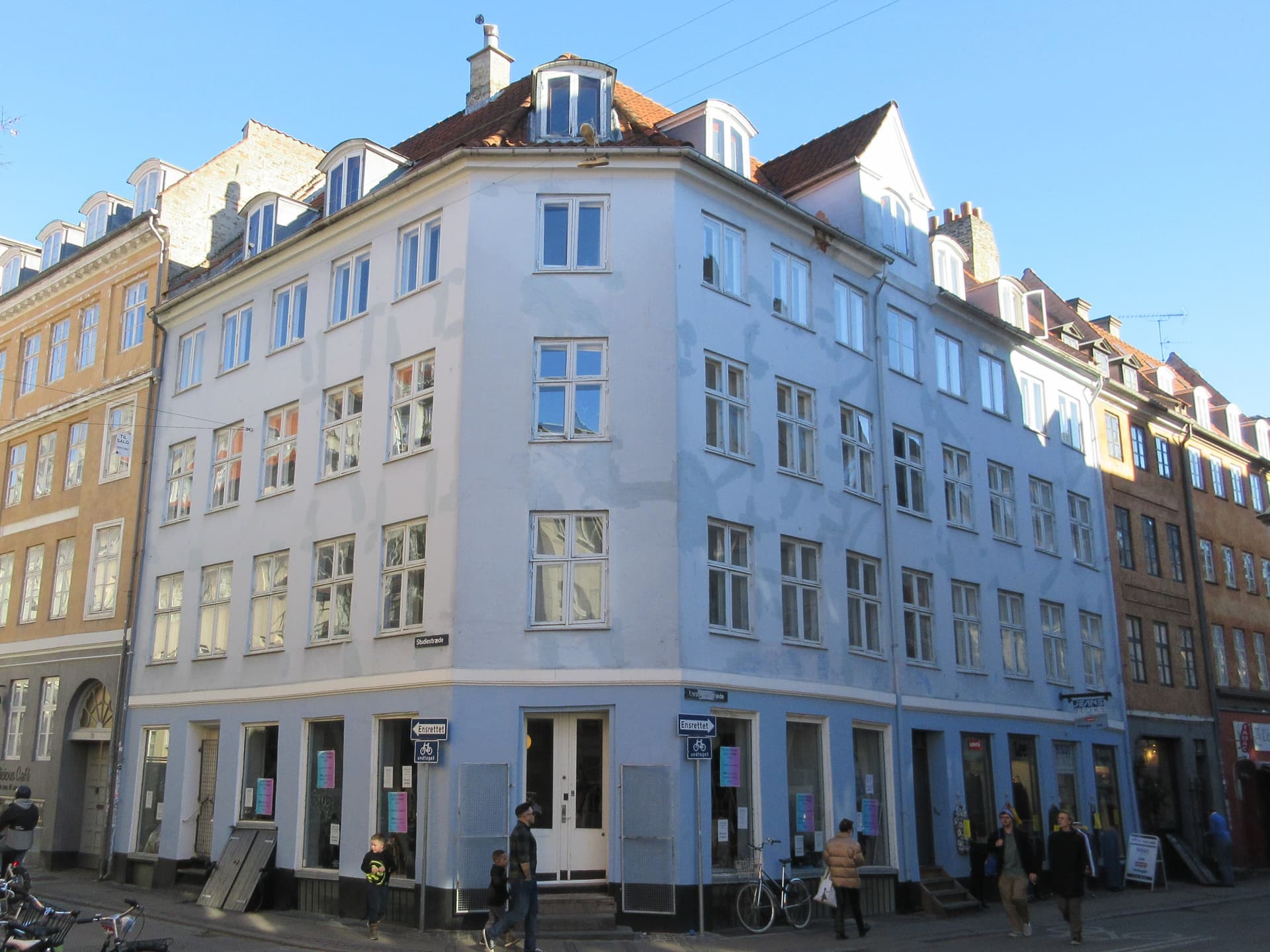
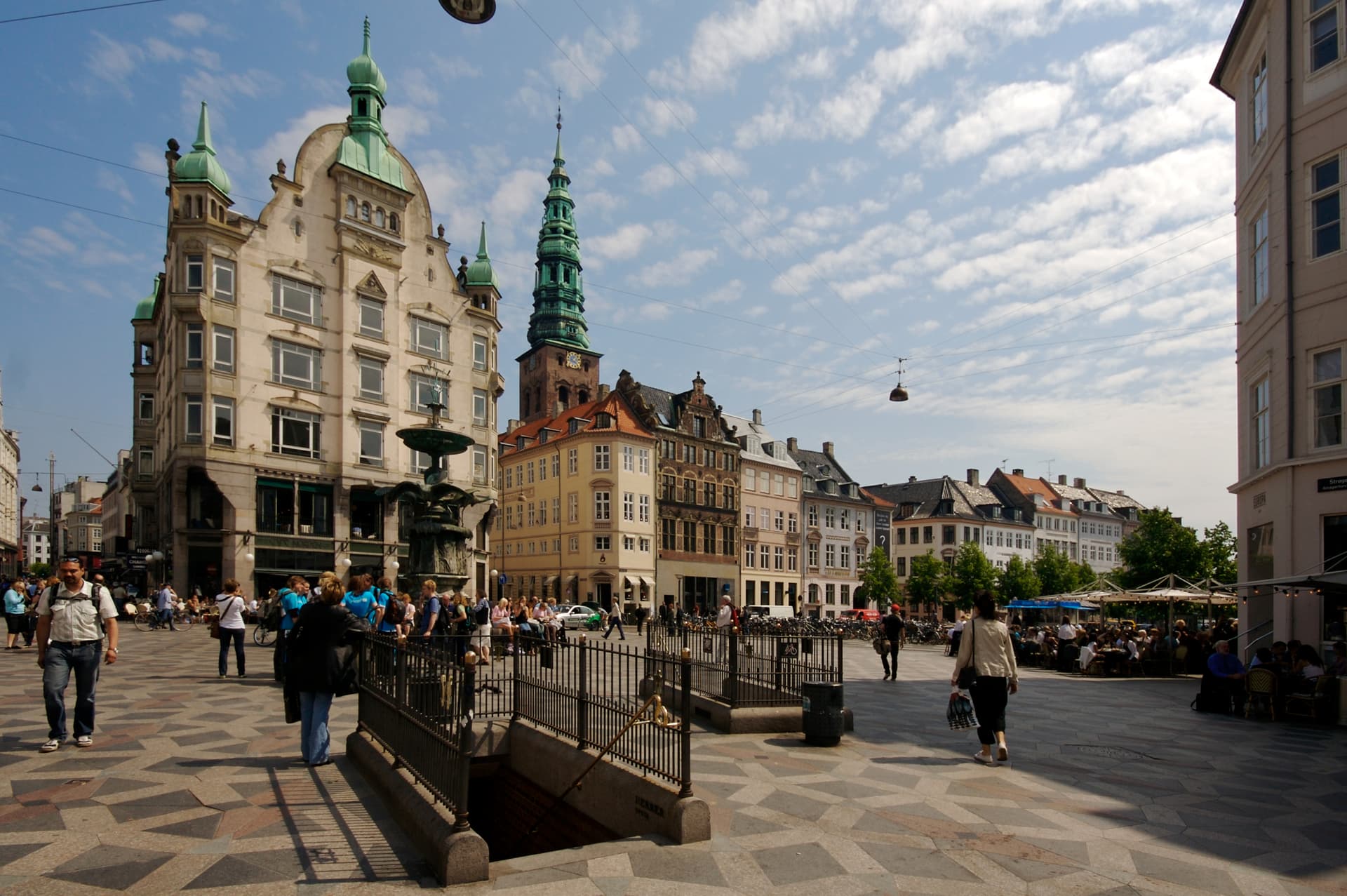
Pisserenden is the detour. Cut north for a few blocks of small design shops and quiet cafés — the alleys that escaped the Strøget pedestrianisation by being too narrow to matter to cars. Come back south to Amagertorv at the Stork Fountain, the rendezvous point.
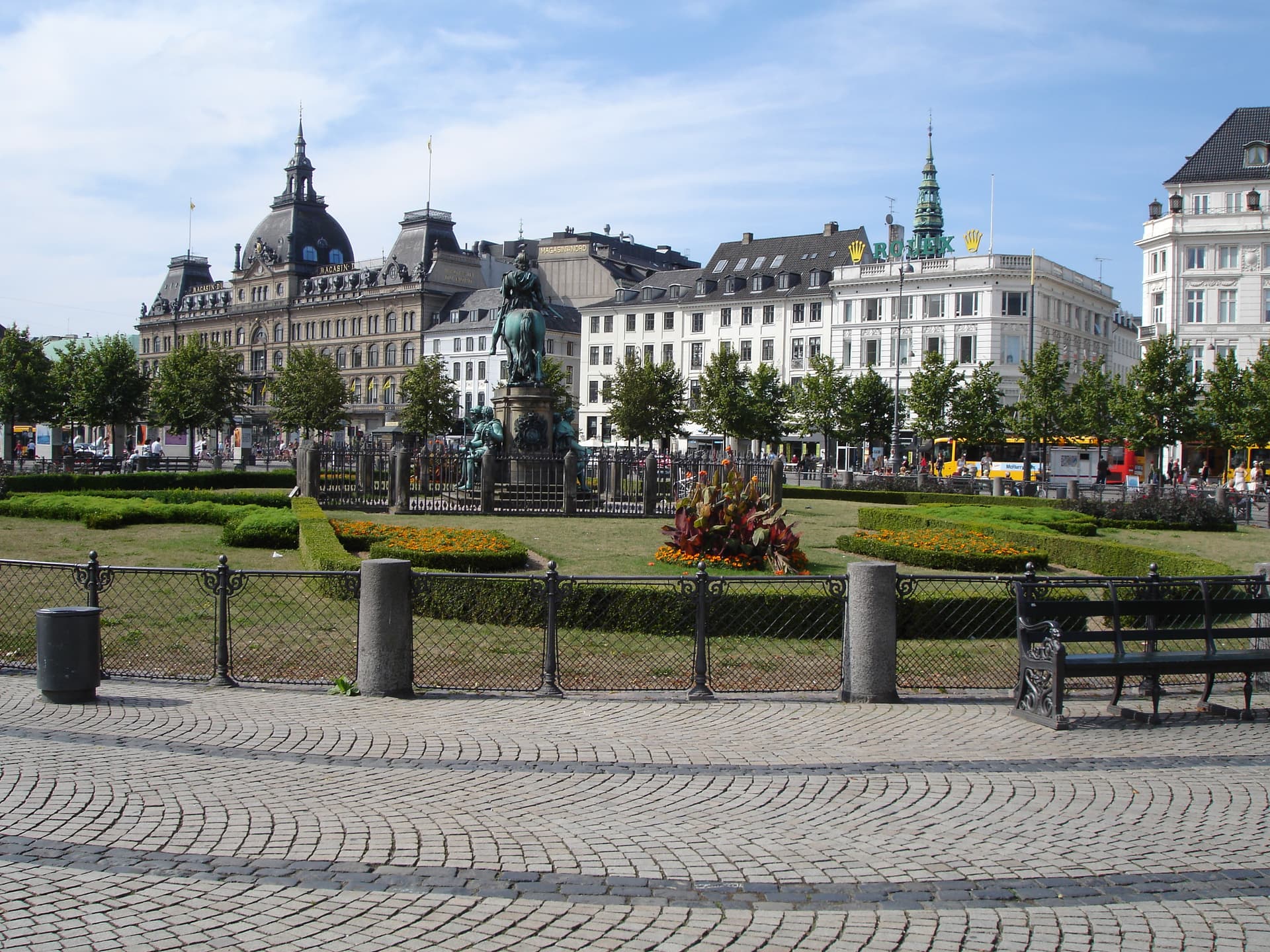
End at Kongens Nytorv — the king's new square, Christian V on horseback in the centre, Nyhavn opening north toward the harbour. Cityringen metro right there.