Skip to content
walkwalk.
Anadolu Hisarı and Göksu: the older, smaller fortress
heritagewaterfront

Anadolu Hisarı and Göksu: the older, smaller fortress

Bayezid I's 1394 fortress at the Bosphorus's narrowest stretch, looking across at Rumelihisarı.

Photo: flowcomm / Wikimedia Commons, CC BY 2.0

Drafted by Claude — the editor hasn’t walked this one yet. We’ll update this notice once it’s been verified on the ground.

Distance

3 km

Time

~ 75 min

Difficulty

Easy

End

Anadolu Hisarı (bus 15F)

Best at

afternoon

Right now
23°C· Mostly clear

Open in Maps for turn-by-turn, or take it offline as GPX.

Anadolu Hisarı is the older, smaller, more forgotten fortress — the one Bayezid I built in 1394, almost sixty years before Mehmed II built the one across the water. The two of them face each other now across the Bosphorus's narrowest stretch, seven hundred metres apart, like a slow conversation between Ottomans a half-century behind and a half-century to come.

Three kilometres on the Asian shore, mostly flat, the fortress at the start and the tea at the end. The 15F bus drops you at the village above the walls. Walk the fortress first — it's smaller than Rumelihisarı, more weathered, and the smaller scale lets you read it as a fortification rather than as a monument. The Göksu stream emerges into the Bosphorus a few hundred metres north; the Küçüksu Kasrı sits where it does because Abdülmecid liked the water meadow it overlooks.

Back through the village's wooden houses to a çay garden facing west. Rumelihisarı sits across the strait at the same scale Mehmed's masons saw in 1452. Bus back from the same stop, or push north for the Beykoz ferry if you want a longer return.

The route

On the map.

Elevation

103 m·103 m·-245 m ASL

Stops along the way

Things to notice.

  1. 01
    1

    Anadolu Hisarı bus stop

    The 15F from Üsküdar drops you at the village above the fortress. Walk south along the shore first — it's the cleanest way to read the walls from outside before stepping inside them.

  2. 02
    2

    Anadolu Hisarı

    Bayezid I's 1394 stone fortress — Güzelce Hisar in the old sources, built sixty years before the conquest when the Ottomans still asked permission to cross the Bosphorus. Smaller than its European partner across the water, and the scale is the point. The interior keep is open most afternoons; the curtain wall is the better walk.

  3. 03
    3

    Göksu Deresi

    The stream that gives the area its name — Göksu means heavenly water. The mouth broadens into a small lagoon where rowing skiffs once moored on summer evenings; the Pasha set was painted here by every Istanbul Orientalist who passed through.

  4. 04
    4

    Küçüksu Kasrı

    Sultan Abdülmecid's 1857 summer pavilion by Nikoğos Balyan, in florid Bosphorus Rococo. Two storeys, ornamental, more about the water meadow it faces than the building itself. Museum hours Tue–Sun, modest entry.

  5. 05
    5

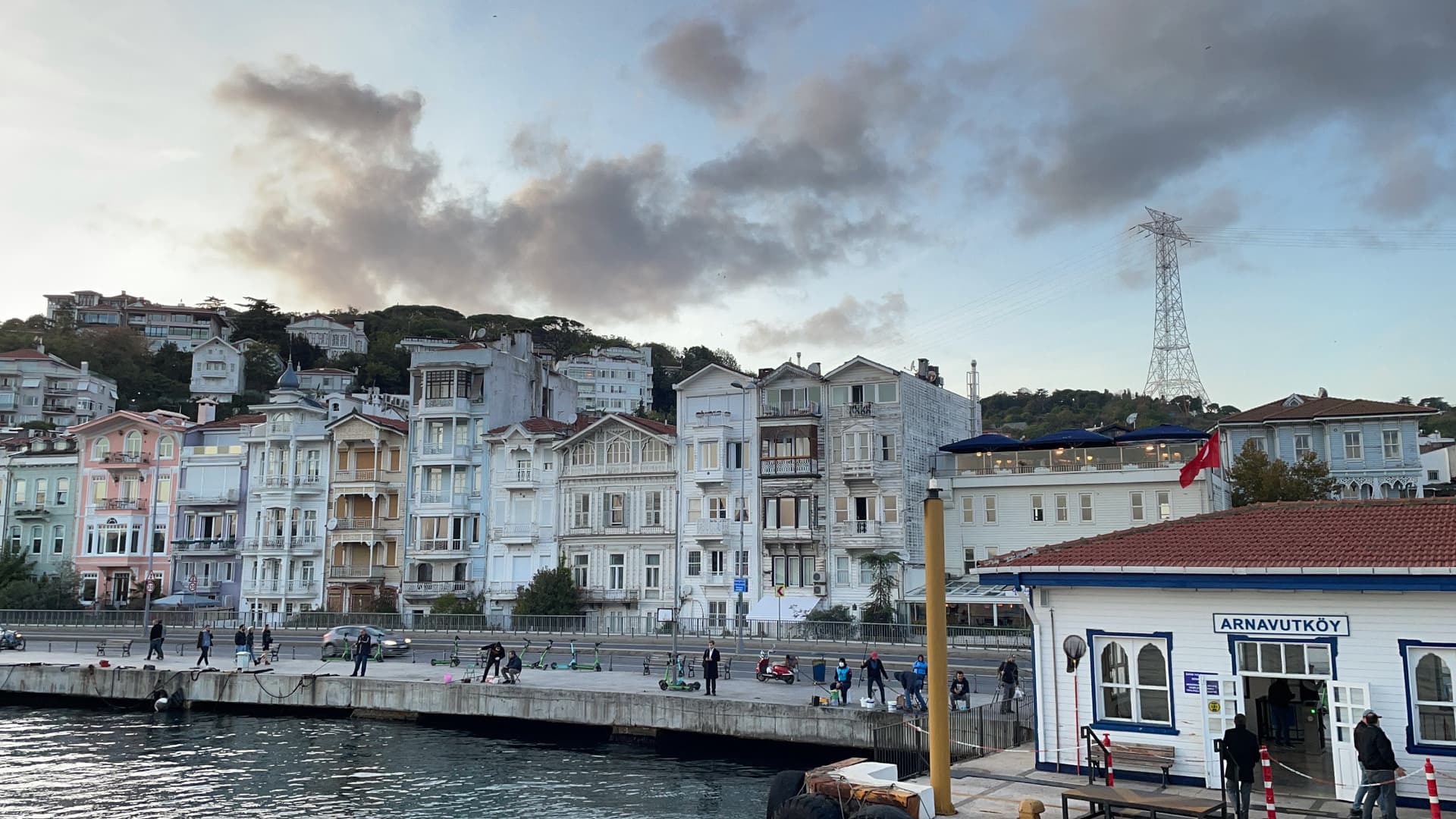
    The village wooden houses

    Two streets back from the water, the timber yalı that defined Bosphorus residential building before concrete took the shore. Most are private and inhabited; walk slowly and look up at the bay windows.

  6. 06
    6

    Çay garden facing Rumelihisarı

    Find one of the tea gardens along the seafront and sit with the view. The strait is only seven hundred metres across here; Rumelihisarı's three towers read in detail from this bench. Tea is a few lira; the view is the rest of the afternoon.