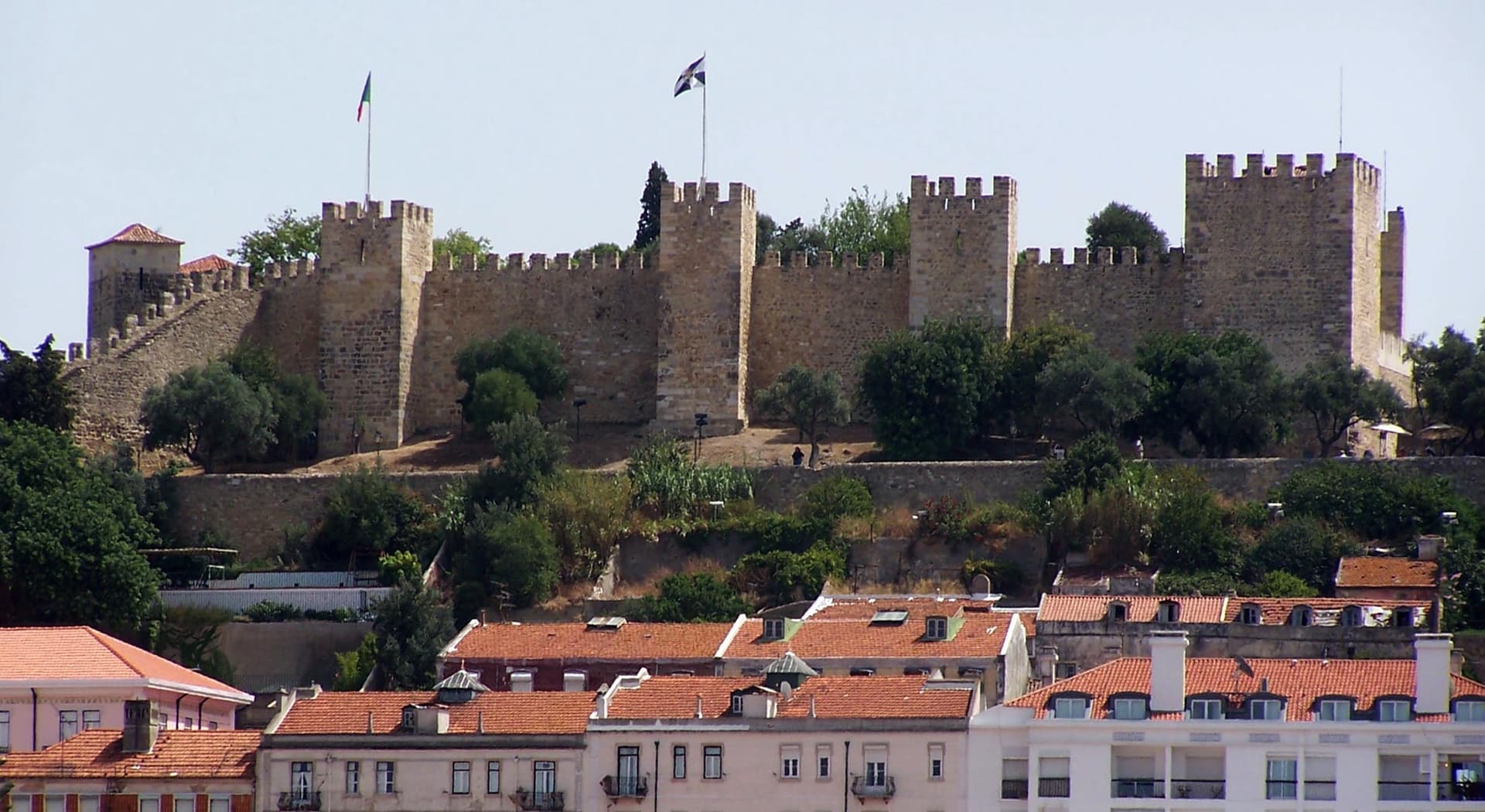
Alfama is the oldest piece of Lisbon and the only one the 1755 earthquake mostly spared — a medieval tangle of lanes too steep and too dense to redraw. You walk it from the bottom up and let it pour you back down to the river.
Two and a half kilometres, slow, because the climbing is the walk. Start at the Sé — the blunt Romanesque cathedral at the foot of the hill — and go up. The two great terraces come first: Miradouro de Santa Luzia, all tiles and bougainvillaea, then Portas do Sol a half-minute higher, where the whole quarter falls away to the Tejo below.
From there, leave the railings and drop into the lanes. Beco do Carneiro is barely wide enough for one, stepped and strung with washing. You will lose your bearings in here; the hill always hands you back to the water eventually. Pass through Largo de São Miguel, where fado (the music) was born and still leaks from open doors at night.
Then down to the river and Santa Apolónia for the metro. You'll have walked the medieval city the way it was meant to be walked — uphill, then home.