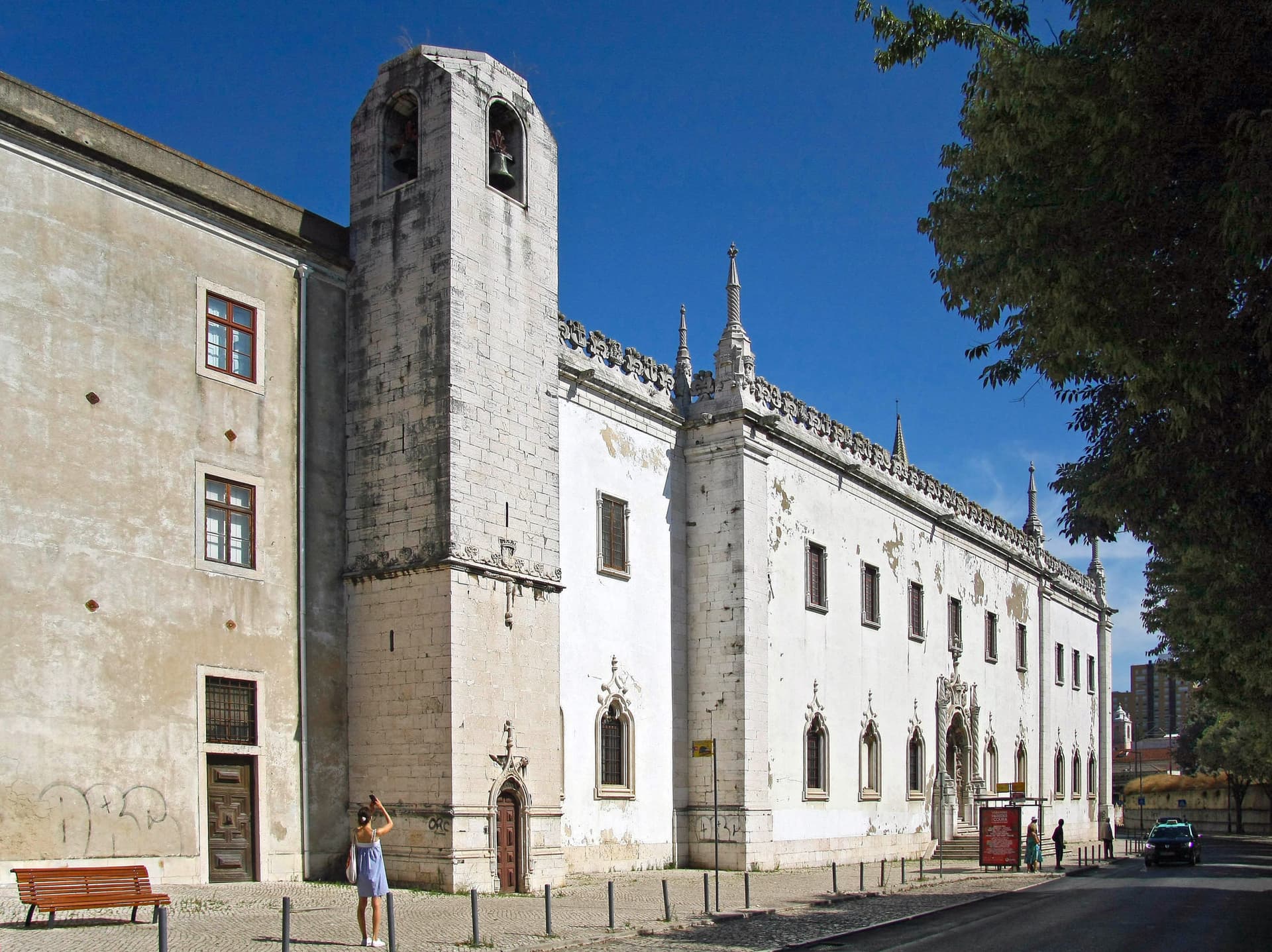
Lisbon is a tiled city, and this is where it explains itself. The Museu Nacional do Azulejo sits inside the Madre de Deus convent in the working east, and it holds five centuries of painted tile from a single panel to whole church walls. Most visitors never come this far out. They should.
Give the museum the morning. The convent is the frame — the Igreja da Madre de Deus alone, gold and blue and baroque to the ceiling, would justify the trip. Upstairs is the prize: a tile panorama twenty-three metres long of the Lisbon waterfront before the 1755 earthquake erased it, the lost city rendered in fired blue. Take coffee in the cloister after; orange trees, stone, nobody hurrying.
Then walk the river edge north. This is the old industrial east — the Convento do Beato, now an events hall but vast and vaulted inside; the rail sheds and warehouse fronts of Xabregas; the Tagus close on your right the whole way. It isn't tidy, and that's the appeal.
The walk ends at Marvila, where the warehouses are turning into something new — but that's the next walk. Bus or train back from here.