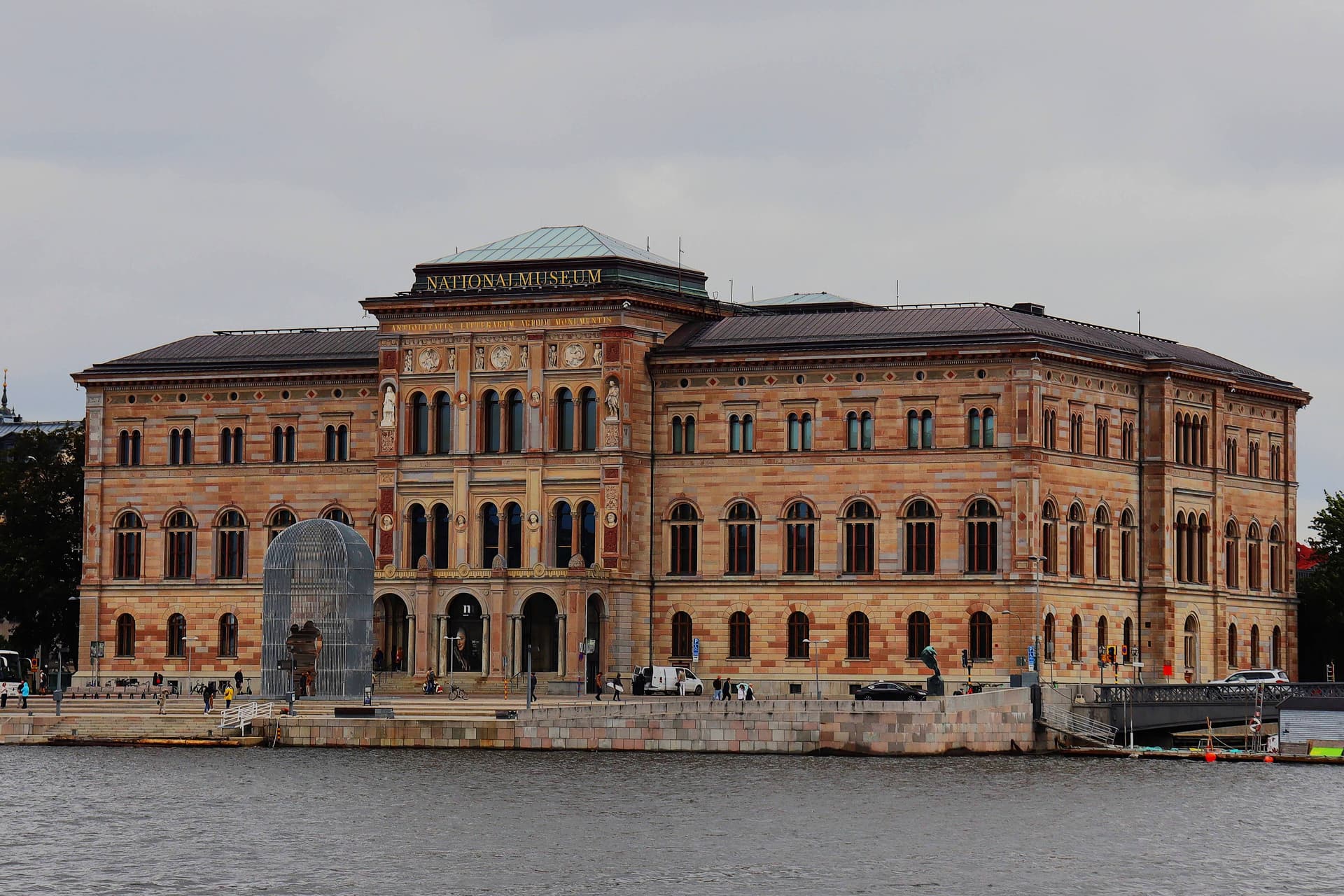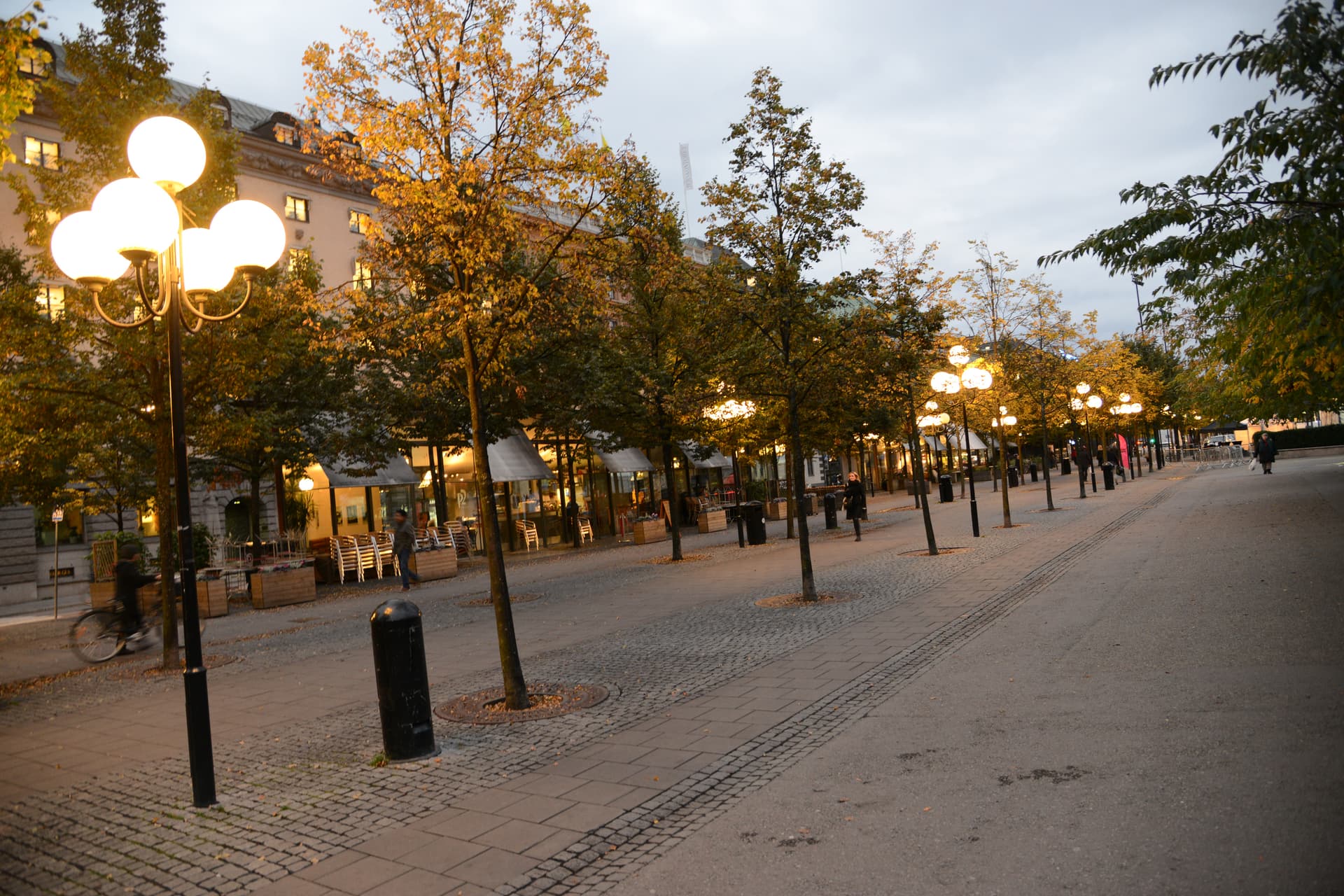
Norrmalm is the modern city — the part Stockholm rebuilt in the twentieth century — and it walks as a straight pull from a green park to an underground food hall, with the hard concrete heart in between.
Start in Kungsträdgården, the King's Garden, which is the city's front room: the cherry avenue for one week in late April, the open-air café the rest of the year, the rink in winter. North from there to Sergels torg, the sunken plaza everyone calls plattan — black-and-white paving, a glass obelisk, brutalism that the city argues about and keeps anyway. Stand in it.
Then up Drottninggatan, the pedestrian spine, walked as a corridor rather than a stop, until it delivers you to Hötorget. The blue Konserthuset — where the Nobel Prize is handed over each December — closes the square, with Milles's bronze Orpheus on its steps. The market runs in front of it most days, flowers and fruit under awnings, a flea market on Sundays. Finish underneath, in Hötorgshallen, the basement food hall: eat something standing up, then take the T-bana home from the same building.