Skip to content
walkwalk.
Ginza: the grand blocks
architecturefood-forward

Ginza: the grand blocks

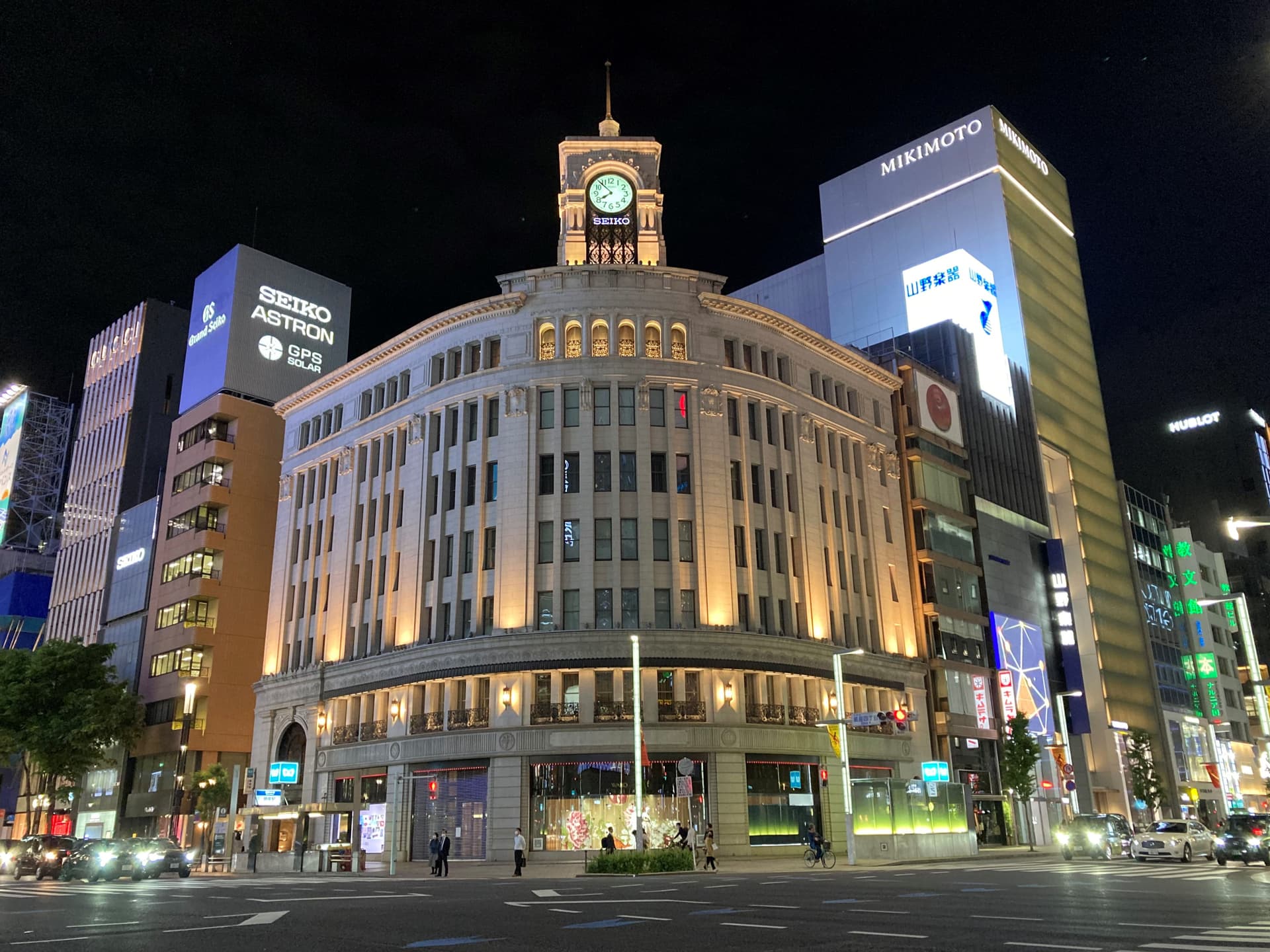
The Wako clock, the kabuki theatre, and the Sunday afternoon when the avenue belongs to walkers.

Photo: Asanagi / Wikimedia Commons, CC0

Drafted by Claude — the editor hasn’t walked this one yet. We’ll update this notice once it’s been verified on the ground.

Distance

2.6 km

Time

~ 70 min

Difficulty

Easy

End

Higashi-Ginza (Metro)

Best at

afternoon

Right now
24°C· Partly cloudy

Open in Maps for turn-by-turn, or take it offline as GPX.

Ginza is the most expensive ground in Japan and it knows it, but the walk that matters here is the cheap one — the food hall, the stationery shop, the single-act seat at the theatre, the Sunday afternoon when the avenue is closed to cars and given back to people. Two and a half kilometres, best on a Sunday when the street is yours.

Start at the 4-chome crossing under the Wako clock, the 1932 tower whose chime still marks the hour. Down into Mitsukoshi's depachika — the basement food hall, the best free show in the city, fish laid out like jewellery. Then up Chuo-dori to Itoya, twelve floors of paper and ink that has stood on this avenue since 1904; go floor by floor.

Cut into the back streets, where the small galleries and old kissaten coffee houses live above the shops — the quiet, older Ginza behind the flagships. Then to the Kabuki-za on Harumi-dori, its tiled gables rebuilt in 2013. You don't need a full ticket; buy a single-act seat at the door, or just walk the lobby and the free rooftop garden.

The theatre sits over Higashi-Ginza station, so the walk ends at the metro. On a Sunday, double back first — the hokousha tengoku hands the avenue back to walkers.
The route

On the map.

Elevation

10 m·12 m·2025 m ASL

Stops along the way

Things to notice.

  1. 01
    1

    Ginza 4-chome crossing

    Start at the famous intersection under the Wako clock tower — the 1932 Seiko building whose chime has marked the hour for ninety years. The crossing is the centre of *Ginza*; everything on this walk is a few minutes from it.

  2. 02
    2

    Mitsukoshi depachika

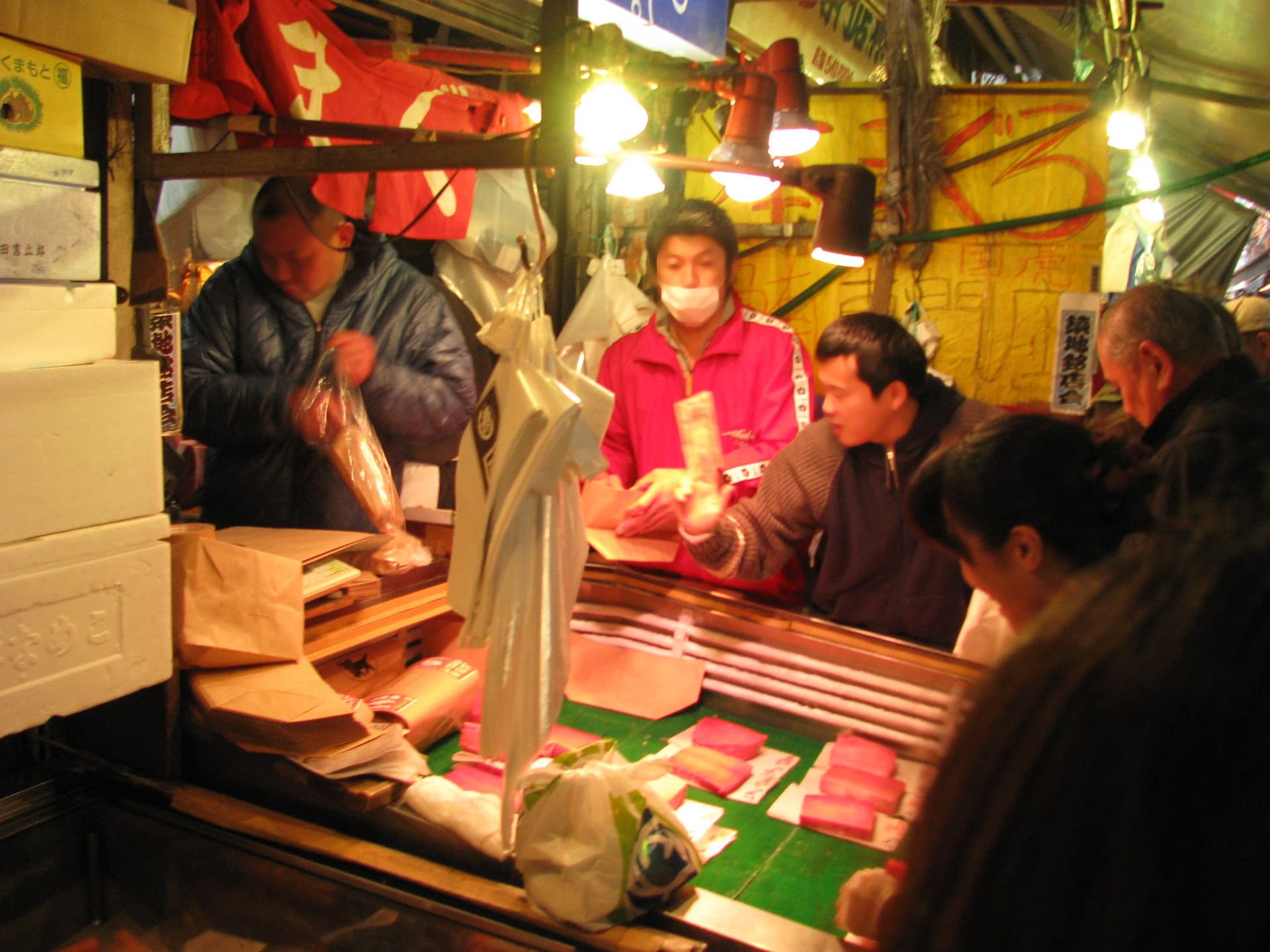
    Down to the basement food hall of the Mitsukoshi store — a *depachika*, the department-store food floor that is the best free show in Japan: lacquered sweets, single perfect peaches, fish laid out like jewellery. Buy nothing or buy lunch; either is fine.

  3. 03
    3

    Itoya

    The stationery hall on *Chuo-dori* — twelve floors of paper, pens, ink and notebooks, with a café and a small hydroponic farm near the top. *Chuo-dori* is the main avenue; Itoya has been on it since 1904. Go up slowly, floor by floor.

  4. 04
    4

    The back-street galleries

    Cut off the main avenue into the side streets, where small galleries and old *kissaten* coffee houses sit above ground-floor shops. The blocks behind Chuo-dori are quieter and older; this is where Ginza stops performing and starts living.

  5. 05
    5

    Kabuki-za

    The kabuki theatre on Harumi-dori, its tiled gables rebuilt in 2013 over a new tower. You don't need a full ticket; single-act seats are sold at the door on the day, and you can climb to the rooftop garden for free. The lobby alone is worth the detour.

  6. 06
    6

    Higashi-Ginza station

    The theatre sits over the station entrance, so the walk ends where the metro begins. If it's a Sunday afternoon, double back up Chuo-dori first — the *hokousha tengoku* turns the whole avenue into a pavement.