Prague keeps its dead on a grand scale. The Olšanské hřbitovy are the largest cemetery in the country — more than fifty hectares of avenues, chapels and sculpted tombs, founded in 1680 for plague victims and grown ever since. Three and a half kilometres, best walked in the morning, when the light comes low through the trees.
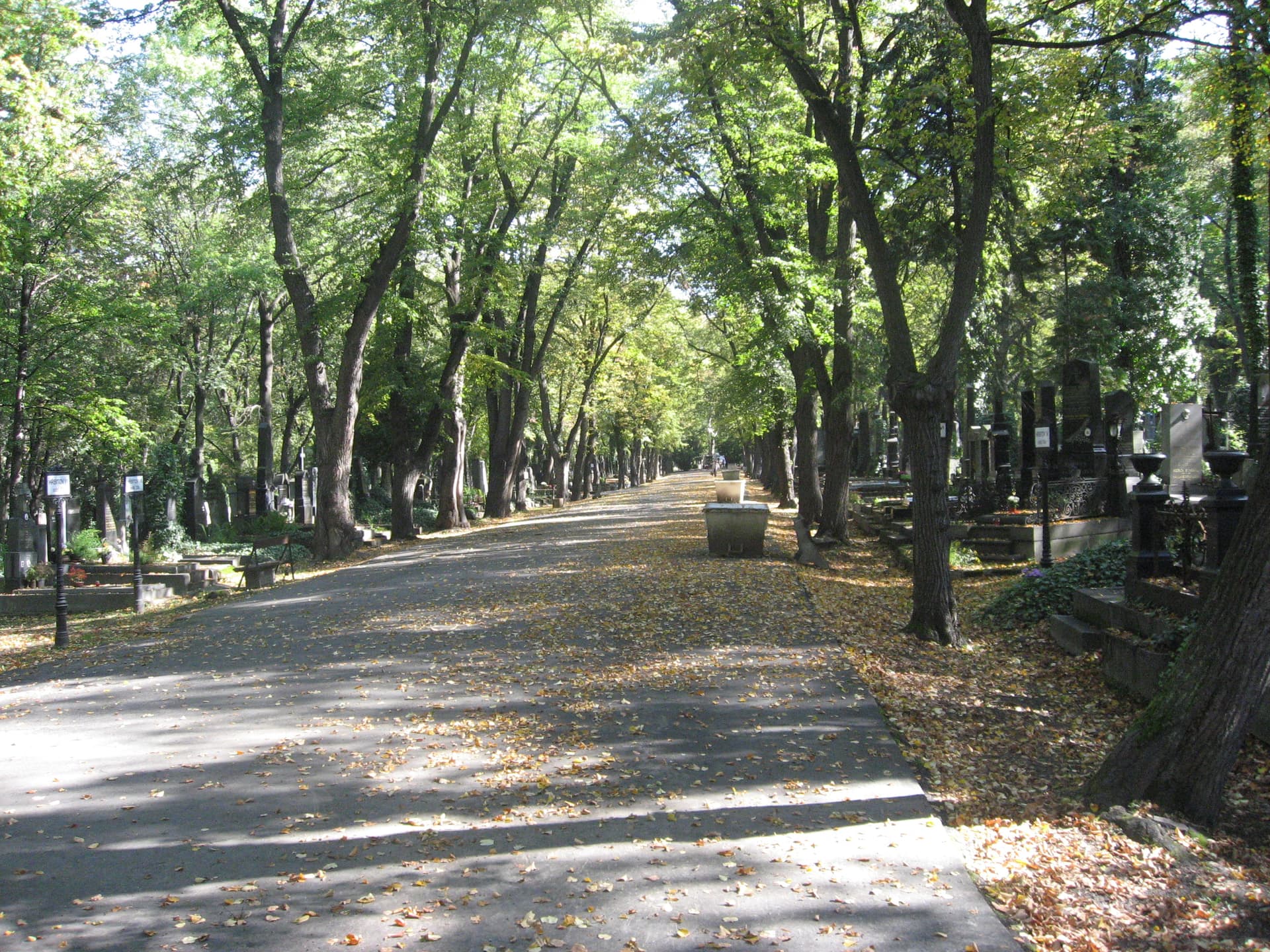
Enter near Flora and give yourself to the long central allée. The trees do as much as the tombs here — limes and maples that turn gold in autumn and shut the city out completely. Drift through the 19th-century family monuments, the angels and the rusted railings, then find the war graves: Commonwealth and Red Army plots kept in plain, sober ranks.
Cross to the Nový židovský hřbitov by Želivského — the New Jewish Cemetery, opened in 1890. Men cover their heads at the gate. Franz Kafka lies near the main path under a plain pale obelisk, with his parents; visitors leave small stones rather than flowers. Stand a moment, leave it as you found it, and take the metro from Želivského.